

Can you also make this? The answer is almost always yes
Ask a Chinese supplier whether they can also produce a second product and you will get a yes. Sometimes it is true. Often it means the order will be placed with another factory, and the margin for arranging that sits inside the unit price you were quoted. You are unlikely to ever learn the second company exists.
This is not bad faith, and it is worth saying clearly before anything else. A direct no risks an account the supplier has worked to keep, the network they are drawing on is real, and a factory that arranges a product outside its own walls is doing something completely normal here. Subcontracting is a standard part of how Chinese manufacturing works and it is sometimes the right answer for your order too. The problem is not that it happens. The problem is when it happens without you.
It also explains a quote that does not behave like the others. A price that will not move, or moves in a single step rather than by negotiating real costs, often belongs to somebody who is not paying those costs. The cheapest quote is not the only quote worth reading carefully.
The commission is the cheapest part of the problem
The added margin is the part brands notice and the least of what it costs them. Your specification was written for one company and will be executed by another. Every hour spent agreeing details with your contact was spent with somebody who will forward a summary, and the people who actually cut and assemble your product will not read what you wrote. Everything that makes a specification survive a factory assumes it reaches the floor. Here it stops one company short.
Then there is authority, which is the real loss. Your supplier has no authority over a floor that is not theirs. When something drifts mid-run, they can ask the other factory to stop. Asking is not stopping. Their own reputation is not on your label, their inspector is not standing on that line, and the commercial pressure that normally makes a supplier fix a problem quickly is pointed in the wrong direction.
The same gap opens on quality. The checks a factory applies to its own output are not the checks it applies to somebody else's, and the further your order sits from the company you are paying, the later a problem surfaces. By the time it reaches you it is finished goods, and a delay discovered at that stage has already cost more than it should have.
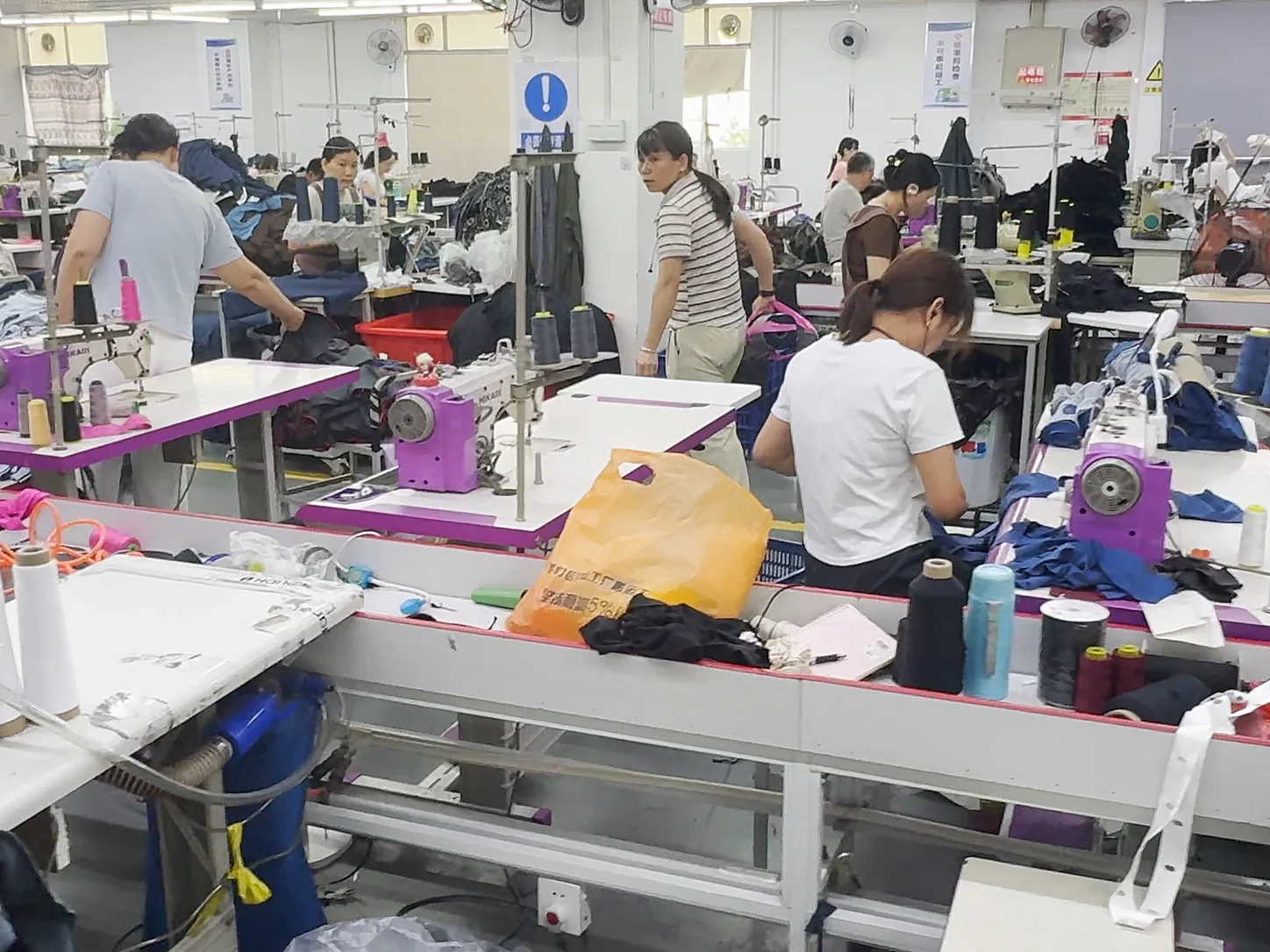
None of this is visible in a quotation, a catalogue or a video call, because none of those things are the building. A factory is organised around one product family. The machines, the tooling, the layout, the maintenance people, the operators who have run the same station for years. A workshop that knits and a workshop that makes bags do not own the same equipment and cannot pretend to. That is the one thing a company cannot rearrange for a visit, and it is the reason this is decided on site rather than by correspondence.
Signs an order may be leaving the building
- The catalogue spans product families that need completely different machines: garments, hard goods, packaging and electronics from a single company.
- The second product carries a longer lead time than their core product and nobody can explain where the extra weeks go.
- Progress photos for that product look like a different place: another floor, another light, another set of hands.
- Answers about that product come back noticeably slower than answers about everything else, because they are being relayed.
- You have been shown finished units of that product many times and the making of it never.
What to settle before the next order
- Do you know, by company name, who will physically make each product on your next order?
- If a detail drifts halfway through a run, who on your side can reach the floor where it is actually happening?
- Which products are at this supplier because they belong there, and which are there because it was convenient to add them?
- What would it cost you to find out the answer after the goods ship instead of before?
Knowing which building your product is in
We are based in Guangzhou and we go and look, the same day when it matters. Not the showroom and not the meeting room. The floor where the product you are paying for is supposed to be made. An hour there settles a question that months of correspondence will not.
Our job is not to catch anyone out. Most of the suppliers we meet are straightforward and a good number of the arrangements we find are perfectly sensible ones. What we make sure of is that the arrangement is known, agreed and priced, and that somebody has stood in the room. That is the layer underneath everything else we do, because sourcing, sampling and inspection all assume you know where the work is happening.
When a supplier does subcontract with your agreement, it becomes workable rather than risky. The specification goes to the company that will use it, the quality gates are set on the line that will run it, and the inspection happens where the product is actually made. It works the same way whether we find the factory for you or step in beside a supplier you already have.
What changes when you know where your product is made
When you know which building your product is made in, the specification reaches the people who use it and a whole category of surprise disappears. Nothing has to be relayed and nothing gets summarised on the way.
It changes how problems get solved too. You are one conversation from the floor rather than three, and the factory behaves differently once it knows somebody comes to look. Brands that visit, or have somebody who visits for them, are simply treated as more serious accounts.
The second product that came from somewhere else
A brand orders apparel from a factory it has used for two years and adds a run of branded bottles to the same purchase order. The bottles arrive with a print that is close to the reference rather than the reference. The apparel supplier is apologetic and cannot fix it, because the bottles were made by a company it does not control and the run is finished. We were not on that order. We usually hear about these afterwards, because that is when a brand calls: after the reprint, not before it. An hour in that building would have shown there was no printing line in it.
Mark the products you have actually seen being made
Take your product list and mark the items you are confident are made in a building somebody on your side has actually stood in. For most brands that mark covers one product and everything else is an assumption that has never been tested. Closing that gap is not a research project. It is an afternoon for somebody who is already here. Tell us what you are ordering and we will tell you plainly whether it is worth a visit.
Subcontracting and supplier honesty: common questions
Is it bad if my supplier subcontracts part of my order?
Not by itself. Subcontracting is normal in Chinese manufacturing and specialised workshops often do a better job of a component than a generalist would. What makes it risky is only ever the version you do not know about, because then your specification, your quality gates and your deadline are all sitting with a company you have no relationship with and no way to reach.
Why would a factory say yes to a product they do not make?
Because a no can end a relationship they have invested in, and because they usually can get it made. Saying yes keeps the account, adds a margin and costs them very little. Understand that the incentive is commercial rather than dishonest and the behaviour stops being surprising.
What is the difference between a factory and a trading company?
A factory owns production capacity and a trading company arranges it. Both can serve a brand well, and plenty of good orders run through trading companies that are open about what they are. The useful question is not which label a supplier deserves. It is whether anyone you trust has been inside the place where your product is actually made.
Does a subcontracted order cost more?
Usually, and invisibly, because the arrangement fee is built into the unit price rather than shown as a line. The larger cost is not that margin though. It is that nobody you are paying has authority over the line running your goods, so problems take longer to surface and longer to fix.
Can I just ask my supplier whether they make it in house?
You can, and the answer will be yes. That is the honest difficulty with this one: it is not a question that can be settled by asking, because the person answering has every reason to say yes and no reason to expect you will ever check. It gets settled by somebody being in the building, which is a very ordinary thing to arrange and a very easy thing to keep postponing.