
Agreement and acknowledgment are easy to confuse across cultures
In a supplier conversation, “yes” can mean three different things: I heard you, I understood you or I checked and it is feasible. Factories often default to the first, because a direct no feels rude and risks losing the order. A factory that considers your tolerance unrealistic will rarely say so in writing. It resolves the gap quietly on the production floor, using its own conventions, and the sample tells you about it weeks later.
There is a word you hear every day in Chinese workshops: chabuduo (差不多), close enough. It is not carelessness. It is the default that fills every detail a customer leaves open. If your file does not fix the measurement, the placement or the shade, chabuduo will fix it for you.
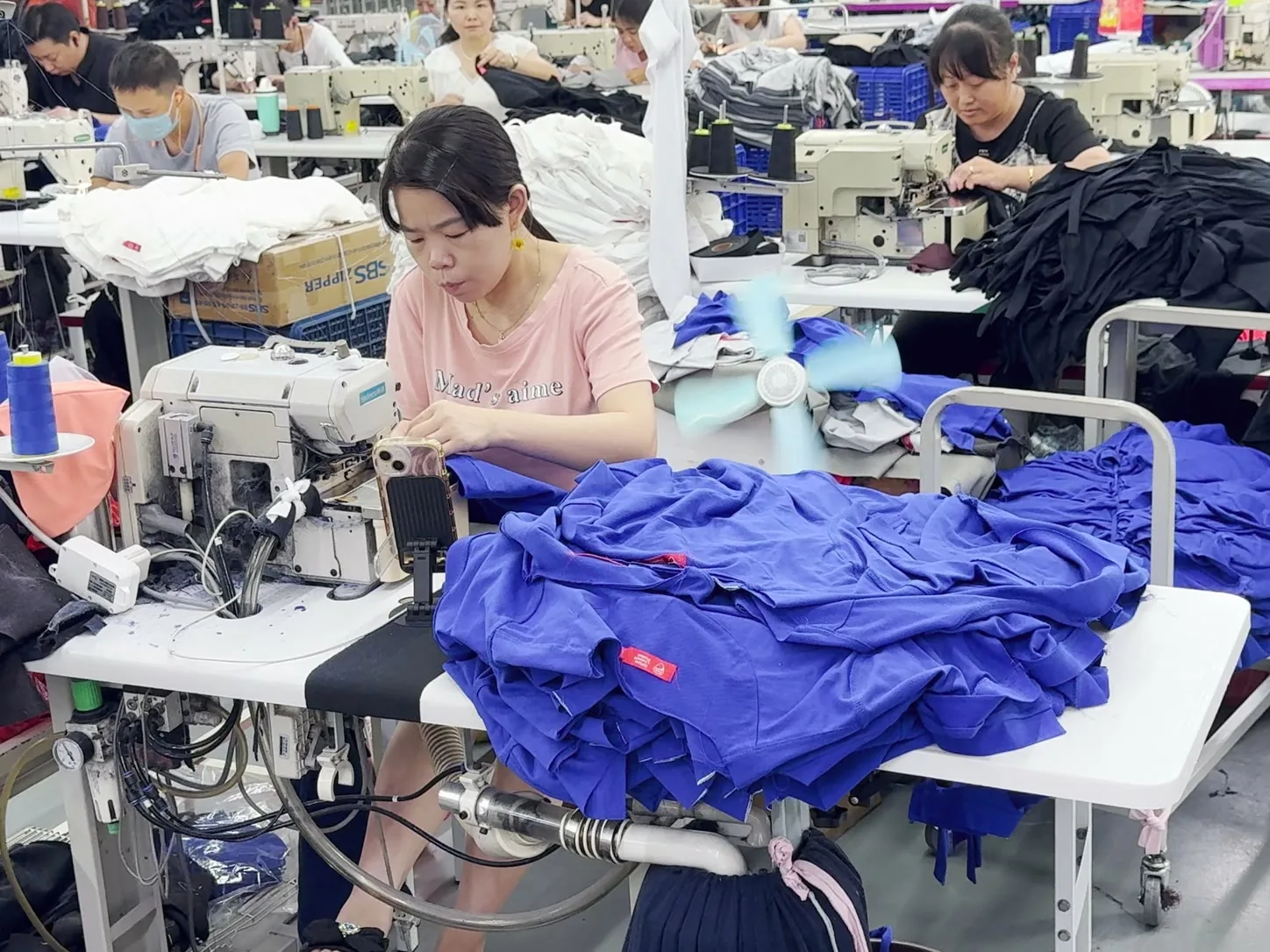
There is also a translation chain inside the factory itself. You talk to a sales contact in English. The work is executed by pattern makers, cutters and line supervisors who never read your messages. Our jersey factory film shows how many hands one order passes through. Anything that lives only in chat history (and not on the spec sheet) may not survive that handoff.
The discipline that actually prevents it
The discipline that prevents this is plain: one consolidated specification, updated when decisions change, confirmed in Chinese where precision matters and referenced on the order, because factories execute documents, not conversations. It is simple to describe and relentless to maintain. It means owning every small decision as it moves through chat threads, voice messages and calls, in two languages, for the life of the order. Most brands have nobody whose job that is.
A useful test for any instruction: could two reasonable people read it differently? Adjectives fail that test in one language and get worse in two. Soft, premium, vibrant and centered mean nothing on a cutting table. A number, a Pantone reference, a countersample or a marked-up photo survives translation because there is nothing left to interpret. Our working rule is simple: if getting a detail wrong would cost money, it gets a number and a written confirmation in Chinese before material is cut.
The medium works against you here. Chinese factories run on WeChat: quotes, approvals, substitutions, dates and photos all move through one thread, in minutes, in Mandarin and often as voice messages. Email barely exists in this business, and if you do not use WeChat the supplier will simply move you to WhatsApp. That speed is genuinely useful. It is also why so little of what gets agreed ends up anywhere durable. A thread scrolls, a voice note cannot be searched and the version people act on is whichever message they happened to read last.
So the fix is not a better tool, and not a move to email, because neither changes where the work happens. Someone has to hold the thread: read it in Mandarin every working day on the factory's clock, catch the moment an agreement quietly changes and put it back into the specification before it reaches a cutting table. That is not a habit you adopt once. It is a role, and it is the one most brands never fill, because it asks for somebody who already knows how factories behave and who is awake while they are working. A question nobody chased in that thread is still a lost day, and those days have a cost of their own.
Signs the communication is drifting
- Everything that was agreed lives in a chat thread and nowhere else, with no current document anyone could open instead.
- Supplier answers are agreeable but vague: confirmations without specifics, photos without measurements.
- Every answer arrives through one sales contact and nothing ever comes back from the people actually making the product.
- A detail you discussed clearly turned out differently in the sample and nobody can say where it diverged.
- Several people on your side send feedback to the factory with no one consolidating it.
What to sort out before the next order
- Does a single, current specification exist that production (not just sales) is working from?
- Which requirements need written confirmation in Chinese before material is cut?
- Who owns supplier communication on your side and who consolidates changes?
- Which past misunderstandings should be designed out of the next order?
Bilingual coordination is about precision, not politeness
We communicate with suppliers in Mandarin, inside the WeChat threads where the decisions actually happen, and turn loose conversations into confirmed specifications. When an answer is vague, we ask again, differently, until it is concrete. That persistence is unglamorous and it is most of the job. It is also the layer under everything else we offer: sourcing, sampling, production follow-up and inspections all run on confirmed details.
Most of what makes that fast is simply having done it many times. After enough orders you stop hearing a polite yes as agreement. You recognise the vague answer that means the factory has hit a problem it would rather not raise yet, and you know which details a given workshop will improvise unless somebody writes them down. A brand meets that learning curve on its second or third order, at full price. We are on it every week, across every client in production.
Just as important, we translate in the other direction: supplier constraints, real production options and honest timelines, framed so your team can decide quickly. It works the same whether we find the factory for you or step in beside a supplier you already work with.
A whole class of defects removed
Clear communication structure removes a whole class of defects before they exist: the ones that were never manufacturing problems, just understanding problems.
It also builds the relationship. Factories take brands more seriously when requirements arrive precise, consolidated and in their language. Better treatment follows.
Decide who is holding the thread
Before the next order, ask who actually holds this on your side: who reads the thread in Mandarin, who updates the specification when something shifts at four in the afternoon in Guangzhou, who confirms the details that cost real money if they drift. If the honest answer is a chat history and nobody, that is the gap worth closing first, and borrowing someone who already does this every day is faster than learning it one expensive order at a time. Tell us where your product stands and we will tell you plainly whether it needs us.
Supplier communication: common questions
Do I need to speak Chinese to work with Chinese factories?
No. Plenty of brands buy successfully in English and factory sales contacts are used to it. But the decisive conversations inside the factory happen in Mandarin and your contact translates both ways. For routine matters that works. For details that cost money if they drift, a written confirmation in Chinese is the safer standard, because it is the version the production floor can actually read.
Why do Chinese suppliers say yes to everything?
In Chinese business culture a direct no is often considered rude and risks the relationship, so yes frequently means I heard you or I will try, not I checked and it is feasible. The reliable signal is never the yes itself. It is whether the confirmation comes back specific, in writing, with numbers that match your specification.
Is WeChat better than email for supplier communication?
In practice the choice barely exists. Chinese factories run on WeChat and almost nothing gets decided by email, so a brand that insists on email is usually just the last to hear about a problem. If you do not use WeChat, most suppliers will work with you on WhatsApp instead. What matters is not which app you use but what leaves it: chat is where decisions happen and a document is where they have to end up, because a scrolling thread is not something a production line can work from.
What should I do when a supplier sends voice messages in Chinese?
It is very common, because a voice note is much faster for the sender than typing. It is also the least useful format for you: transcription accuracy drops with regional accents and factory noise, and nothing in a voice note can be searched three weeks later. Treat a voice note as a conversation, never as a decision. If it changed something about the product, ask for that part back in writing, or write it back yourself and ask them to confirm it.
What does chabuduo mean in manufacturing?
Chabuduo (差不多) translates roughly as close enough. In a workshop it is the standard applied to any detail the customer left unspecified. It is not bad faith, it is how production keeps moving. The protection is to leave nothing expensive unspecified: numbers, references and countersamples instead of adjectives.